
 |
 |
 |


TRYING TO ACHIEVE PETER STEELE'S TONE
(originally written Jan 2020; latest update May 2025)
On this page, I delve into what I currently use to reproduce his tone. I go into thorough detail regarding the gear that Peter Steele used for Type O Negative here. There is a second page of my effects exploits here with additional experiments, alternatives, and some of my previous set-ups.
PREFACE
Firstly, there seems to be a difference between Peter's studio and live tones (although Bizarre Festival 1999 is incredible), so keep in mind that I'm trying to find an album tone with stage gear research. Secondly, since starting this endeavor, YouTubers like Jim Lill, Glenn Fricker of Spectre Sound Studios, and Josh of JHS have opened my ears to the "fool's errand" that I've been on. I've been trying to mimic the bass tone on a recording that may have passed through a microphone (or several microphones with their own inherent EQ) then run through a mixing board/program that can tweak anything. Another tone seeker, Circle Minus, believes a lot of Peter's impressive live sound might actually be partly attributed to Josh playing distorted keyboards along with Peter.
I'm in agreement and his proof of concept can be found here.
* PUTTING IT ALL TOGETHER *
INSTRUMENT
The simplest solution would have been to buy a five-string bass, but I wanted a four-string. Many BEAD-tuned 34" basses run the risk of the neck not producing enough force against lower-tuned strings, causing players to complain about a floppy B-string that isn't well-defined. I bought a 35" bass to reduce this issue. The longer 35" span requires more tension on the strings, and these higher tensions reduce flop and that increases definition. I found that an ESP LTD F-4E with a balanced set of EXL160BT strings easily satisfied my early needs. If you want to go the 35" route, look into used Peaveys and LTDs, as they have offered a few extra long models over the years - the F-4E even has a nut ready to accommodate larger string gauges without filing. Otherwise, a 34" scale with a sturdy neck and balanced strings, should help reduce the tension problem.
I eventually decided to build my own 34" Washburn M-series replica with an active EMG SJ in 2023. This pickup did a great job and was dead quiet. During the mock up, I tried a Ghost piezo bridge - I could hardly tell the difference between the two, so omitted the piezo. A year later, I re-routed the "M14" to fit the passive Seymour Duncan SMB-4D I had originally bought for this project. The impressive SMB greatly increased output and sustain, but did reproduce electromagnetic interference that the EMG didn't. I also switched to using standard tension stainless steel strings (DR BKB-50) and found the slight flop didn't really bother me.
I advise against the likes of a DigiTech Drop as the tracking is lackluster on chords and the heavier strings. Peter's Alembic Spoiler had Alembic AXY pickups, which can get pricey. These unique pickups are considered single coil although there is a second coil stacked beneath them, which kept them quiet. You do not need a sustainer for most of Peter's catalog and he wasn't even using them live in the last seven years of his career.
HEAD & CAB
Photos show Peter using a solid state preamp with a built-in graphic EQ as far back as 1995 - he only used solid state preamps throughout the tours. When choosing an amplifier/preamp, my best recommendation would be one with an effects loop. Bonus if it has a graphic EQ. I started this endeavor in 2020 with a 1991 Gallien-Kruger 800RB, which I felt worked really well, but I picked up a Peavey Tour 450 in December 2022 that allowed me to remove the MXR EQ pedal from the chain.
By summer 2023, I had finally snagged a Peavey MAX Bass Preamp - more on this hard-to-find preamp below.
There's been a lot of science coming down the YouTubes regarding tone in the 2020s. One especially startling discovery (thanks to Glenn at Spectre Sound Studios) relating to metal players is that as you apply more distortion, the aspects that we thought dictated tone - the guitar and its components - become less influential. For metal players this means that our choice of speakers and cabinet geometry play the larger roles in our live tone. To me, a lot of Peter's live distortion tones sounded lackluster. My opinion is that Peter's best live tone was at Bizarre Fest 1999. It appears that the only cabs on that stage were two walls of Marshall 412 stacks, stage right and stage left. I have had people write to me about how much better their DS-1 sounded through a direct audio interface into their digital audio workstations. So maybe there was some sort of DI or IR at Bizarre, though that doesn't explain why he would choose to lug cabinets around during the following tours if it sounded that good ... maybe for feedback? During that late-90s era, he was claiming to use a combination of Peavey 210 and Peavey 118 cabinets (loaded with an 18" JBL) for live shows, but I believe he was using Peavey Tour 410 and 115 cabs near the end of his career.
I first started with a Hartke 410XL & 115XL stack, then went to a single Peavey 410TX with the horn and crossover already bypassed. Both worked well, but I preferred the TX a little more for distortion and sold the Hartke stack in 2022. The TX, TXF, and TVX cabs are all very similar, with the obvious differences generally being the crossover ranges for more highs and the porting (TX rear; TXF and TVX front). A very common mod is to bypass these active crossover systems as many users have agreed they make the cab sound like it is covered in a wet blanket when intact.
I wanted to experiment with a 212 or 412 for some time, and managed to find a TC Electronic K212 (with tweeter) locally in April 2025. Though the K212 may seem a bit "smoother" in some regards, the 410TX sounds tighter with a more traditional/deeper bass tone. I wasted no time wiring in a DPST switch to turn the K212's Eminence ASD:1001 1" driver off. There is noticeable differences with the 50watts @ 8ohms tweeter being switched on, some for the better and some for the worse. The sizzle livens it up to sound more like the 410, but it is prone to noise ...and feedback, though this might be desirable. I'd wager the biggest factor here is speaker EQ, rather than the speaker size. So, if you can find a used Peavey 410 locally, it will likely be the best bang for your buck.
MY PREAMP EXPERIENCE
I initially really liked the preamp of my Tour 450. Coming from the 800RB, I felt it better handled the distortion I was putting through it. It seemed a little more defined and it was nice having a built-in 9-band EQ specifically designed for bass frequencies. Over time, I felt there was room for improvement. Many people use the MAX Preamp to mimic Pete's tone, but looking back at my favorite live performances, the Bassist was present in Peter's rig. For the first time, I started looking for a Bassist but miraculously found a MAX in a little shop in Tennessee. I fell in love with it with minimal tweaking immediately after it arrived. The MAX added a fuzziness without being muddy. Do you need one to get close to Peter's tone? No, but it's pretty nice and I won't be giving mine up.
I also have a Peavey Bassist Preamp that seems to use identical circuitry. The Peavey T-MAX head should have a similar preamp circuit as these two predecessors and is easier to come by, plus you won't need an additional power amp. I have no experience with the prior and later products branded as MAX.
Note that none of these circuits produce anything remotely close to the necessary distortion on their own - you will still need a pedal.
If using either a MAX or a Tour, these are pics from Peter's live shows:


INPUT OR EFFECTS LOOP ...OR BOTH?
I originally believed Peter split his bass signal into two separate pedal chains, then combined the two signals before the power amp. This was mostly due to a 1998 interview with him stating there was a tremolo and reverb splitting off from an AB pedal ... was this for his studio tone? Early in the endeavor, I would run an always-on clean signal through my Gallien-Kruger 800RB's input/preamp to add some character to that signal, then ran the distorted signal into the effects return to keep the distortion tighter. However, after a couple years, I had read no other evidence supporting two chains and found that a single chain sounded fine.

Doesn't quite do it for me.
EFFECTS CHAIN
I have confirmed that Peter was using the DS-1, CH-1, and DD-3 from 1999 to 2007, however this chain doesn't quite nail it for me. There are some great examples of Peter Steele tone by YouTubers using a DS-1, but direct ins and software may be playing a large role in the tones heard in those cover videos. Some eras (both studio and live) sound more impressive than others. The above board might get close to his live tone (Josh's playing was likely the icing on Peter's sound), but I wanted to get closer to the impressiveness of October Rust.*
If it wasn't for the rumor of him using an Aria APE, I'd be very inclined to think the DS-1 was a joke that Peter put at his feet just to throw the competition off.
Haha.
* Per a friend of his, Peter would use whichever bass he was currently [endorsing] for each album. This would mean The Esh with the piezo bridge was used on the October Rust album, with many claiming this gave it a unique range of tone options. However, I tried a Ghost bridge in the same instrument as an active EMG J model I was building. I expected an "airiness" with additional sustain, but they sounded so similar that I omitted the Ghost.
Michael Draven, a member of the Circle Minus group insists the DS-1 is very finicky with which pickups (he recommends actives) and EQ settings (recommends a less bass-heavy curve) it plays best with when trying to achieve Peter's tone. I would agree, as my DS-1 sounds more clipped/throttled with my bass with an active single coil versus the other with an active humbucker and even worse with the passive SMB-4D. I also discovered that if I bypassed the pre gain of my preamps and used the effects return, the clipping became more sublte. Page founder "Circle Minus" points to the intro of Blood & Fire here: Peter starts, then Josh comes in with that amazing fuzz, and then Kenny punches in. Peter's lone DS-1 tone is still phenomenal here, but any DS-1 I've tried (a 1987, a 1999, and a 2016) won't do the fuzziness heard throughout the albums and none of us have a Josh, so remove the frustration and buy yourself a Metal Zone or DigiTech Metal Master. As for the generational circuits of DS-1 pedals being different and this causing the frustration, I have personally A-B'd all three different opamp versions of the DS-1 and could not tell the difference. I have bought and sold maybe six DS-1 pedals, and the one I kept (just in case) sits in its box.
Instead of a TU-2 into a DS-1, my configuration starts with the instrument plugged into a Boss TU-3 that continues to a Boss MT-2. It could be that Peter liked the DS-1 because it helped him cut through live mixes well and its intense desire to feedback. However, I cannot stress how much better the infamous Metal Zone is for replicating Pete's more-epic tones (especially at bedroom volumes). The "can of bees" adds a fuzzy sustain and it can be tweaked to get brutal palm mutes along with plenty of sizzle. The TU-3 and the MT-2 stay at my feet, allowing the MT-2 to be my "channel switcher" for the rig. The MT-2 is a cheatcode that provides additional features to dial in a more precise sound that I feel is a better representation of what my perception of Peter's tone is.
Note that during my research for Peter's gear page, evidence began to turn up that shows the CH-1 last in the line, with the DD-3 placed before it. Although the two acts share the same pedals, the above picture was from a Carnivore show.
Even when I first began this endeavor, I considered the Boss DD-3 to be unnecessary as it can muddy up the distortion effect. From footage, I believe Peter predominantly used long delays for the occasional cavernous distorted echo, to produce "waves" during string scrapes, and a few clean segments like the intro to All Hallows Eve. But when I started playing Creepy Green Light in late 2022, I placed a DD-7 at my feet, just after the MT-2. The TU-3, MT-2, and DD-7 are powered with a single Boss PSA adapter, and are the only pedals that get turned on and off. Just to be clear: I do not keep delay on all the time.
Remaining pedals are kept near the amplifier and remain always on. The Boss CH-1 Super Chorus is next, which is cheap and perfect. So if you don't already have a chorus, just get one of these. I discovered that the chorus adds a bit of sizzle that Peter strived for. The chorus can then be followed by an optional MXR M108SE, which is great for refining the distortion if your amp doesn't have a graphic EQ. Peter used EQs to tame his feedback, though that has not been overly problematic with the MT-2 as it can be with the DS-1. Why did I place the EQ here? I don't know, this is just where it ended up when I was running two chains. By 2024, I had eliminated the M108S and adjusted my EQ on the MAX closer to Peter's settings. Despite what is seen on his live preamps, Pete said in an interview that he scooped his mids. Again, maybe he was referring to his studio tone.
It's now time to add the reverb, which Peter joked had helped the band to hide their mistakes. I'm convinced there's no way reverb wasn't always somewhere in his rig and this makes me wonder what else we're not seeing?* I use a DigiTech Polara because the reverb had gone out on an old amp and the Polara was a very good, but also a fairly cheap, pedal back then. I'm sure a Boss RV, or any other basic reverb, will do just fine ...though my fellow "TONe chaser," Ethan Lawson, does not recommend the FRV-1. I currently have my Polara set to Hall, though I used to have it set to Spring.
* early 2024, I started to think that for live shows, he didn't even bother with reverb. He wouldn't need it coming through his wedge monitor and he could simply rely on the soundtech and natural acoustics of the venue to provide that effect.
The last pedal is the BBE SS-92 Sonic Stomp. This pedal was recommended on a forum, by someone claiming to be Peter's tech, to tighten-up the whole signal just before it hits the power amp. Though sublte, it does exactly that, like voodoo magic slathered in snake oil. I may be wrong, but to me, it is like an advanced resonance knob. These exciter effects may sound more dramatic on older or lower-quality amplifiers. If you want to try one, you could put an aural enhancer pedal at the bottom of the priority list.
Feb 2026 Update: I finally got around to experimenting with the effects loop a bit. There is a significant difference where the delay is placed, and placing it in the effects loop makes the initial note and echo sound more uniform than before the preamp. This sounds more like Peter’s delay, especially on Creepy Green Light, so I will start focusing more on this signal path in my own setup.
If no effects loop, or only using the power amp:
Instrument > TU-3 > MT-2 > DD-7 > CH-1 > M108SE > Polara > Sonic Stomp > Input or Effects Return
My Peavey MAX (previously a Tour 450) Setup:
Instrument > TU-3 > MT-2 > DD-7 > Front Input /// Effects Send > CH-1 > Polara > Effects Return
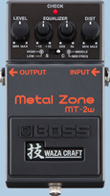 |
Low: 3:00 High: Max Mid: 1:30 Freq: 9:00 Gain: 3:00 (Std Mode) |
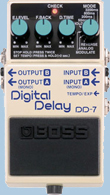 |
E.Level: 1:00 |
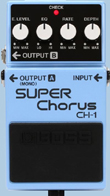 |
E.Level: Max |
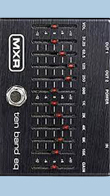 |
31.25: 0 62.5: +7 125: +5 250: 0 500: -1 1K: -6 2K: +4 4K: +10 8K: +8 16K: +11 |
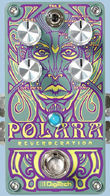 |
Level: 12:00 Type: Hall Liveliness: 3:00 Decay: 12:00 (Tails On) |
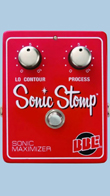 |
Lo Contour: 1:00 Process: 11:00 |
(most settings above are like the time on a clock. ex: 12:00 means to dial the knob to point to top-dead-center)
(these setting were tweaked for the EMG SJ - I may eventually update for the SMB-4D)
CHORUS ALWAYS ON?
In
January 2025, I tried playing without the chrous more frequently. The chorus adds impressive shimmer, sizzle, and makes for super-crunchy palm mutes. However, it does sound more like a guitar by making the tones trebly and piercing. I am starting to think this pedal was not always on because: why else would it be at his feet? There are a few pics of the CH-1 last in the chain, so it would've been easiest to just leave this pedal switched on and sitting in the rack. So, I have to imagine that if Peter never turned chorus off, it would not have been at his feet.
I am still experimenting with this and can get a more round and fuzzy, less harsh tone with the chrous off.
Those with better ears may be able to identify when Peter didn't use his signature-sound chorus.
DISTORTION ALTERNATIVES
I already mentioned substitutions for several of the effects, but I'll do a deep dive on distortion options. Although the Boss DS-1 worked for Peter at extreme volumes, it lacks oomph for the neighbor-considerate player. One thing that I found that helped this pedal was to place a dimed MXR Dyna Comp before the DS-1 to add fullness and sustain. So give that a try if you're hellbent on that DS-1 tone. Ironically, the pedals that I found to work best get a lot of hate from guitarists - that's good, because that makes them cheap for us.
Two different people have written me saying they achieved the tone near-perfectly when they routed their distortion pedal through sims on their computers, and I have seen this through YouTube. Ethan successfully used the DS-1 while Dan used the Boss MD-2 in this manner. These anecdotes further solidify my belief that Peter's best tones cannot be easily achieved "in the room" and are most obtainable by way of a [processed] signal.
The first pedal that got me in the right direction was the DigiTech Metal Master. Set the Morph to twelve-o'clock, then dime the Bass and Treble. I did ultimately choose the Metal Zone due to the finer tweakability, but I love the Metal Master's simplicity. Another highly-mocked pedal is the DigiTech Death Metal - it's a beast, so you may want to add a noise gate and I prefer an ISP Decimator over a Boss NS-2 here. One cool thing about the Death Metal is that you can go balls-out with it to produce feedback. Start with the Low, Mid, High at about twelve-o'clock, then work from there. Due to the feedback possibilities, I may try messing around with the Death Metal again. Don't let the gear nerds fool you: DigiTech made some great pedals.
If you want a lot of different pedals in one, the DigiTech DF-7 Distortion Factory does an amazing job at reproducing the DS-1 and MT-2 circuits, along with five other classics. Well, except for the Metal Master because of where DigiTech locked the Morph knob ...a huge disappointment, which is why I eventually sold it. This is still a great pedal to experiment with to find what works for you and what does not. DigiTechs are also great for plugging directly into a mixer due to the additional output with cabinet modeling (regardless if the distortion effect is on or off).
Results with a Carcosa and the various Big Muff fuzzes that I tried were lackluster, at least on their own. However, I will say that the Orange Fur Coat isn't bad. The MXR Fullbore Metal, the pedals that replicate my beloved Ampeg VH-140C's preamp, and both the Boss HM-2 (or Behringer HM300) and Boss HM-3 sounded either anorexic or overly harsh, depending on how I dialed them in. They all lack the Metal Zone magic: *sizzle*
EXCITER & ENHANCER ALTERNATIVES
These aural effects make for interesting pedals and each company seems to use a slightly different circuit to achieve clarity. Aside from the multitude of BBE Sonic Maximizers and Stomps, the Aphex Aural Exciter, Boss EH-2, Behringer EX2100 and SX3040, and the Aphex Xciter series are probably the easiest ones to find.
The Boss SP-1 and the Behringer SE200 (SP-1 clone) tend to be placed in this category, but I do not believe they function in the same fashion.
As I stated before, their benefit might be heard more in older gear.
SIMPLE, CHEAP, & ON-THE-GO
When I leave the house, I will sometimes take a few spare pedals so that I don't have to break down the setup. I run a single chain consisting of a TU-3, then an MT-2, and then a BF-2 (Manual: minimum; Depth: max; Rate: third of the way to max; Res: third of the way to max). These go into the input of my Ampeg BA-110. Super convenient with only one daisy-chained Boss PSA supply.
Just like Peter's alleged Aria APE, Donner currently makes a pedal that includes his chain's three effects. There's the Alpha Cruncher and the Alpha Force, and each unit costs about the same as one Boss pedal would. This is the simplest, cheapest route to getting into Peter Steele territory quickly.
If you have any interesting details, discoveries, or corrections, please email me.
Many thanks to those who have!
(end)